In Memoriam – Joe D’Agostino

It is with deep sadness that ATU Local 113 announces the passing of Joe D’Agostino, former Executive Board Member. He is remembered for his thirty-three years of dedicated service to the TTC and his many contributions to our Local, where he was a strong advocate for the rights of our members. Brother D’Agostino was the father of retired former Shop Steward Mike D’Agostino.

Our thoughts are with his family and loved ones during this difficult time.

Further details will be announced.

The Executive Board
ATU Local 113

In Memoriam – Giuseppe D’Agostino

Visitation
Vescio Funeral Home “Woodbridge Chapel”
8101 Weston Rd. WOODBRIDGE, ON L4L1A6

Monday, April 20, 2026
2:00 pm – 4:00 pm
6:00 pm – 8:00 pm

Service
St. Roch’s Church
2889 Islington Ave.toronto, ON M6E 3R7
Tuesday, April 21, 2026 at 10:00 am

Final Resting Place
Queen of Heaven Catholic Cemetery
7300 Hwy # 27WOODBRIDGE, ON L4L 0K6

Please see the full obituary and additional details, please visit: 

https://www.vesciofuneralhome.com/memorials/giuseppe-dagostino/5704602/

ATU Local 113 met with Crosslinx Transit Solutions Maintenance

On April 9, 2026, ATU Local 113 met with Crosslinx Transit Solutions Maintenance (CTSM) at the Toronto Public Library – Albion Branch to begin negotiating a first collective agreement for our members who work at CTSM. Local 113 represents maintenance workers at CTSM, including electrical maintenance technicians (EMTs) and facility maintenance technicians (FMTs). Local 113 Executive Board Members were joined by Chris Brozek, the shop steward for our members at CTSM, along with ATU International Vice President (IVP) Manny Sforza, ATU Canada National President John Di Nino, ATU Organizer Eric Fischler, and legal counsel Alanna Mihalj.


Statement regarding the Ontario Budget & Bill 98

April 2, 2026

Statement regarding the Ontario Budget & Bill 98

The Ford government introduced legislation to give itself total control over transit service, fares and revenue anywhere it wants. The bill was introduced to give the Minister of Transportation power to:

  1. Set fares – Establish fare structure, including prices, discount policies, and transfer policies. Required to participate in a unified fare payment system.
  2. Share revenue – Prescribe geographic zones, transit systems must apportion fares among the other systems.
  3. Set service levels – Designate routes as priority, set service and integration standards.
  4. Paratransit – Specialized transit systems must participate in a unified trip booking system.

This legislation has extremely sweeping powers to control transit by regulation. It allows the government to dictate who will provide service on a route, where the routes will be, how frequent the service will be, what the fares will be. There may be even bigger potential impacts.

Doug Ford already controls transit expansion. They gave us massive delays and cost overruns on light rail projects (Eglinton and Finch LRT), one of the most expensive new subways in world history, i.e. the Ontario Line.

This is being sold to the public as fare and service integration. But that’s not what this is. This is a power grab. It gives the Minister of Transportation total control over local service, as well as the power to set fares and spread TTC revenue across the Province, with no certainty for reliable service and ridership growth.

The government already has the power to integrate fares and service integration. What is missing is a reliable operating subsidy to balance costs between municipal transit agencies. Instead of funding good service, this legislation gives the Province access to TTC fares and the power to share the revenue across the region – without input from Toronto residents and accountability to them. Toronto taxpayers and transit riders could end up subsidizing service in other cities. We could also expect service levels to drop to 905 levels, with no certainty that service levels will increase with ridership growth.

It also specifically allows the government to impose fares by distance or mandate different fares for bus, LRT or subway. For the first time in over a century riders may have to pay to transfer within TTC.

We have some serious questions that need to be answered before the legislation moves forward:

  1. Will Toronto’s transit service levels be maintained?
  2. Will riders be able to move around Toronto service on a single fare, or will we be forced to transfer between modes?
  3. Will fare revenue from TTC be used to subsidize 905 service?
  4. Who do riders call if the other transit agency buses are deemed unreliable or delayed? The Minister? Their MPP?
  5. Will there be a reciprocal formula? Does this expand the TTC service, the most efficient service in North America, outside of Toronto into other regions?
  6. If TTC fare revenue is being redirected how will the city / TTC support itself without severe cuts to services or tax hikes which will be caused by the provincial legislation.

TTC riders and Toronto residents deserve answers. ATU Local 113 supports properly funded transit and para-transit (Wheel-Trans) which is directed and controlled by elected Toronto municipal officials who are accountable to the public. Transferring control from elected local representatives to unaccountable bureaucrats in Queens Park is a recipe for poorly managed and unaffordable transit service.

The union is actively addressing these and other issues with different levels of government and we will keep you informed with further updates.

Financial Literacy Day


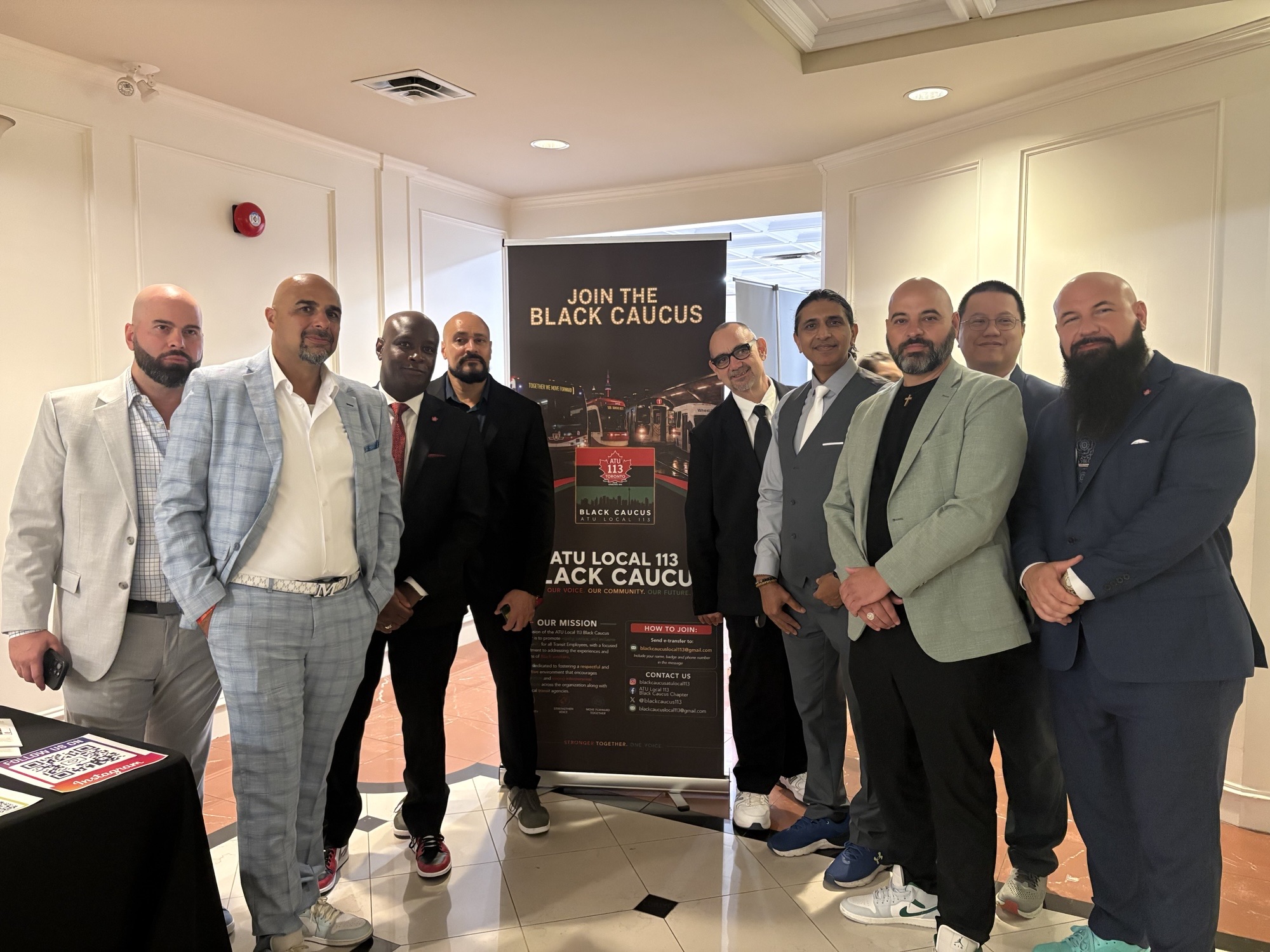
Join the ATU Local 113 Black Caucus for a powerful Financial Literacy Day—designed to help you build wealth, manage debt, and invest with confidence.

IBEW Building, 1377 Lawrence Ave E
Sunday, April 19, 2026
1:30 PM – 3:30 PM

Topics include:
• Budgeting & saving
• Investing strategies
• Debt management
• Real estate